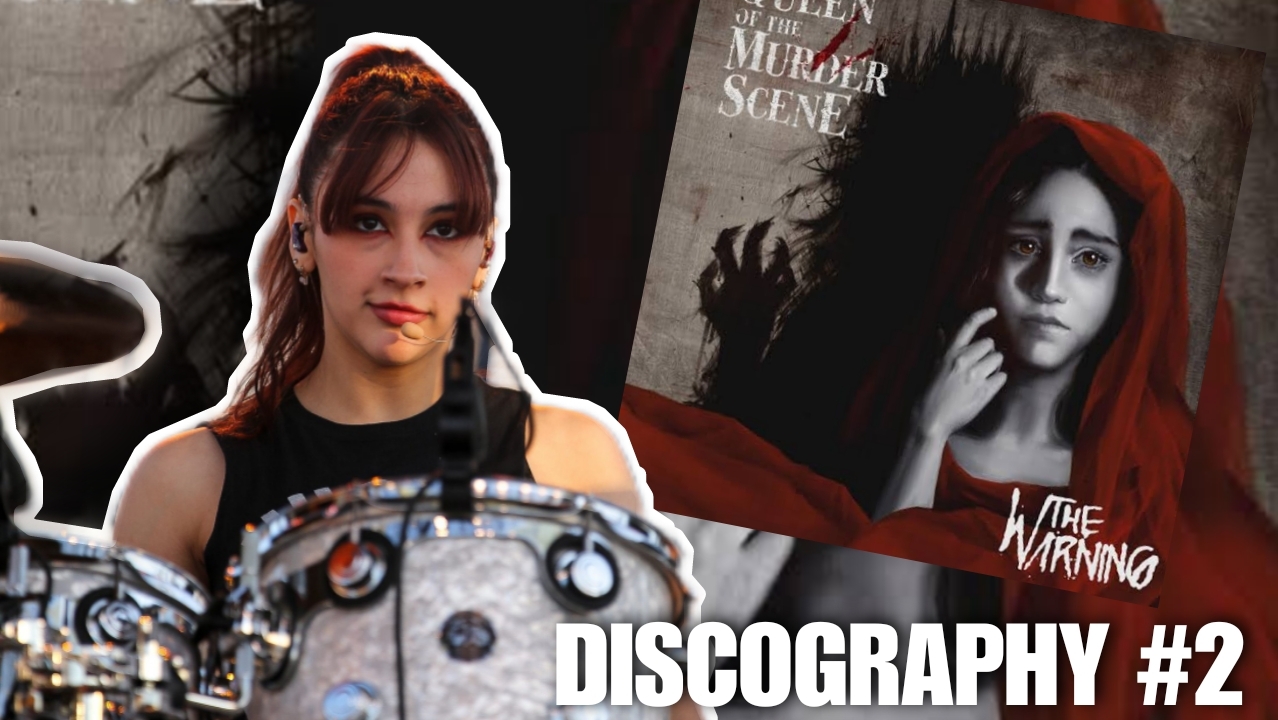
Following the raw energy of their debut album XXI Century Blood, the Villarreal sisters – Dany, Pau, and Ale – chose a more ambitious path. They decided to create an album with a cohesive narrative, told from two alternating perspectives: the protagonist’s "good" side and her dark, psychotic alter ego. This narrative duality creates tension and emotional depth throughout the listening experience.

A CONCEPT BUILT IN CHAPTERS
The album was recorded at Sphere Studios in Los Angeles and released independently through Nada Mas Records. It was cleverly structured into chapters, released separately in the weeks leading up to the full album drop:
Prologue: “Dust to Dust”
Chapter 1: “Crimson Queen,” “Ugh,” and “The One”
Chapter 2: “Stalker,” “Red Hands Never Fade,” and “The Sacrifice”
Chapter 3: “Sinister Smiles,” “Dull Knives (Cut Better),” and “Queen of the Murder Scene”
Visually, the album cover art reinforces the concept – a girl in a red hood whose shadow reveals a monstrous figure, with the fabric subtly turning into blood splatter. This attention to detail is one of the reasons the album has resonated deeply with fans.
TRACK-BY-TRACK NARRATIVE
Each song plays a role in advancing the plot:
1. Dust to Dust – Sets the grim tone of mortality.
2. Crimson Queen – Introduces the protagonist’s alter ego.
3. Ugh – Expresses inner turmoil and frustration.
4. The One – Portrays obsessive love.
5. Stalker – Shifts from obsession to pursuit.
6. Red Hands Never Fade – Deals with guilt and consequences.
7. The Sacrifice – Marks a moral descent.
8. Sinister Smiles – Acceptance of the protagonist’s dark side.
9. Dull Knives (Cut Better) – Alludes to premeditated violence.
10. Queen of the Murder Scene – The narrative climax.
11. P.S.Y.C.H.O.T.I.C. – Mental fragmentation after the act.
12. Hunter – The hunted becomes the prey.
13. The End (Stars Always Seem to Fade) – A somber reflection on fate.
MUSICAL EVOLUTION AND PRODUCTION
Musically, the album shows a clear evolution. Dany’s guitar work is more layered, Pau’s drumming more dynamic, and Ale’s bass lines more expressive. The production reflects the narrative duality, shifting between melancholic introspection and explosive fury.
Tracks that reflect the protagonist’s sanity are often cleaner and more melodic, while those that reflect her descent into madness embrace dissonance, aggressive vocals, and unpredictable tempo shifts.
CRITICAL RECEPTION AND FAN IMPACT
The album received praise from both critics and fans. Many noted the maturity of the Villarreal sisters – who were just 18 (Dany), 16 (Pau), and 13 (Ale) at the time – and their ability to craft a cohesive and emotionally rich concept album.
Publications like Rock and Blog described it as a journey of “love, madness, murder, and death.” Fans on Reddit often name Queen of the Murder Scene as their favorite album, admiring both its musical and lyrical depth.
LEGACY AND BEHIND THE SCENES
The album was supported by a behind-the-scenes documentary offered to Kickstarter backers.
Its chapter-based release created anticipation and kept fans engaged.
A live version of the album was recorded at Lunario, praised for capturing the band’s onstage intensity.
The cover art's subtle symbolism adds an extra narrative layer.
The album explores themes like duality, guilt, obsession, and the consequences of personal choices – a bold move for such a young band.
FINAL THOUGHTS
Queen of the Murder Scene is more than a concept album – it's a narrative experience that rewards repeated listens. It elevated The Warning from promising young musicians to full-fledged artists with a clear creative vision.
If you’re a fan of conceptual rock, female-fronted power trios, or dark and emotional storytelling in music, this album is essential listening. And here on Japanese Female Rock, we celebrate such fearless musical storytelling – no matter where it comes from.
---
This album is masterpiece.
ReplyDeleteThis album is perfect
Delete